Long-form guides written by the people who build and deploy the platform — what to buy, how to set it up, and where the honest limits are. No affiliate lists, no filler.
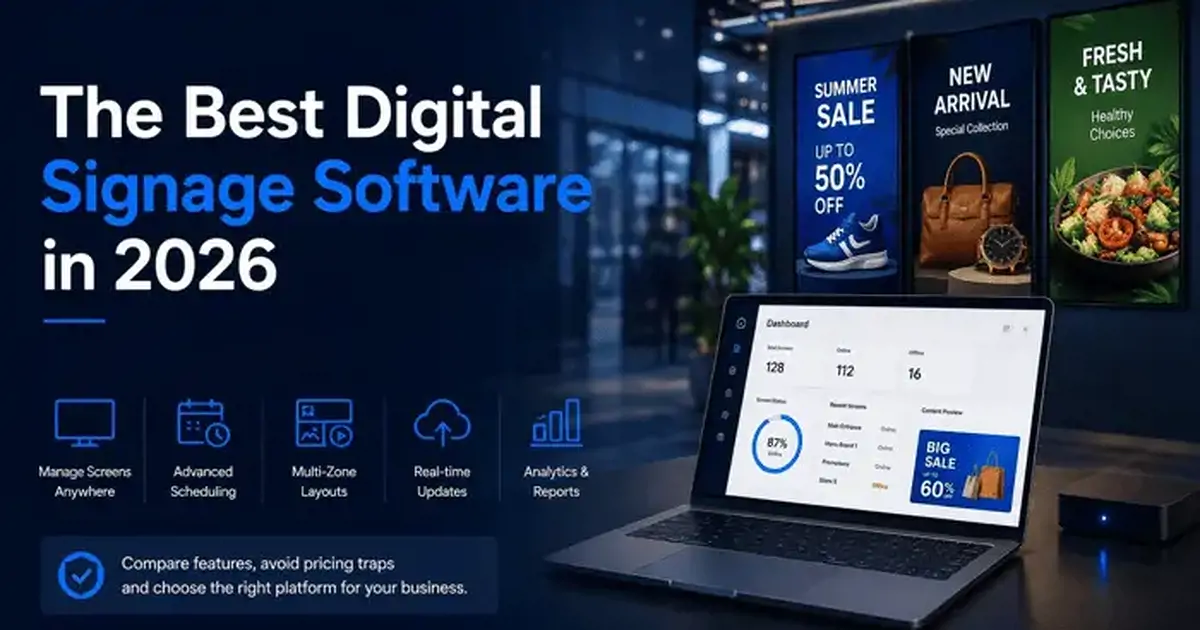
Most "best digital signage software" lists are affiliate pages. This one is a buying framework: the eight things that decide whether a platform works for you, the pricing traps, and a shortlist you can finish in an afternoon.
The mechanical part really does take about ten minutes. This guide covers the decisions that come first — what the screen is for, where it goes and which player runs it — then the setup in order, and the five failures behind almost every first-week support ticket.
A reference walkthrough of every capability in a digital signage platform — what each one is for, when to reach for it, and which players are actually live today. It closes with deployment practice for estates of 1, 10 and 100 screens.
Forty restaurants is not forty times one restaurant. This guide covers the chain problem: who is allowed to publish what, how a price change reaches every site on the same morning, and how you audit that a screen is really playing what head office thinks it is.
Digital signage rarely fails on day one — it fails quietly over six months. These are the ten mistakes that do it, from consumer panels on a commercial duty cycle to screens nobody owns, and what to do about each.
Most digital signage ROI figures are vendor marketing. This is the arithmetic instead: what a screen really costs over its life, the three things signage can actually move, a payback formula, and how to measure the lift without fooling yourself.
Free digital signage software is genuinely good enough for a lot of businesses. This is an honest breakdown of what you give up, what open source really costs in staff time, and the exact point where paying wins.
Campus signage is a governance problem as much as a technical one. This guide covers screen placement, publishing permissions per department, emergency override, and the IT questions that decide whether it survives term two.
LG's webOS commercial displays put the player inside the panel. Here's what that means in practice: how to install and pair an app, what the different webOS Signage generations support, and where it wins over Tizen.
Retail signage fails when every screen plays the same loop. This playbook assigns a job to each zone of the store — window, entrance, aisle, shelf edge, queue — and shows what content each one needs.
Samsung's Smart Signage Platform removes the external media player entirely. That's elegant when it fits and frustrating when it doesn't — here's how Tizen signage actually works and how to decide.
A Fire TV Stick is the cheapest way to get a screen live. It's also the device we field the most support tickets about. Here's how to set it up properly — and an honest account of where it falls short.
Android TV is the most common way to run digital signage in 2026 — cheap, capable and everywhere. Here is the full setup, including the device settings that cause 90% of "my screen went blank" tickets.
Digital menu boards don't sell more food because they're digital. They sell more because of what digital lets you change. Here are the five mechanisms that actually move average order value — and how to measure them.
A full planning guide for restaurant operators — how many screens, what to put on them, how to daypart menus, what hardware to buy, and the design rules that decide whether a queue can actually read your board.
We value your privacy.We use cookies for analytics to understand how visitors use our site and make it better. Deny and we set no analytics cookies at all. See our Privacy Policy.